
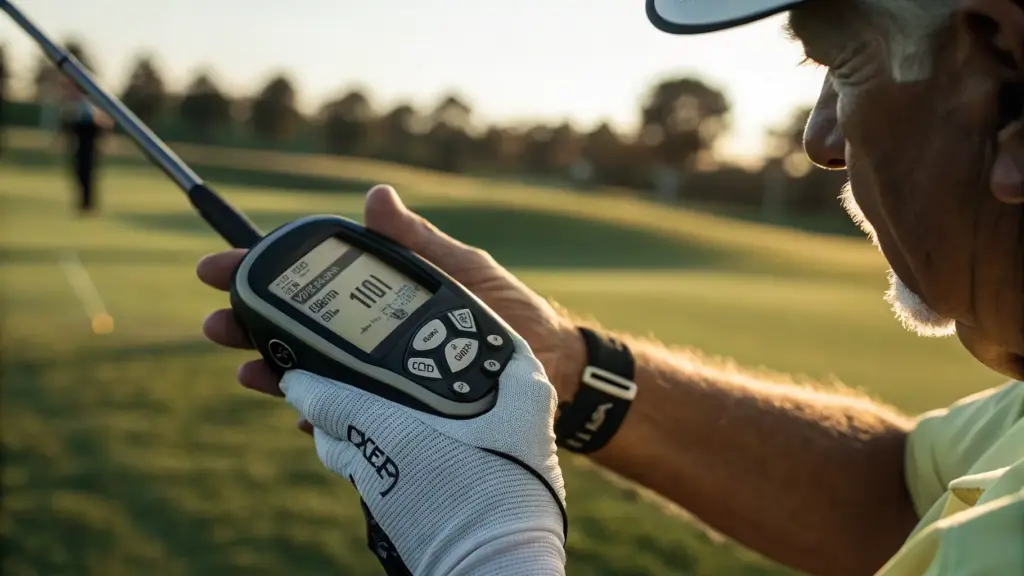
Bushnell Pro X3 Rangefinder: A Caddie in Your Hand
I used to be the golfer who relied on sprinkler heads and my buddy’s GPS watch to figure out yardages. I told myself that “close enough” was fine, that the real issue was my swing, not my distance management.
But deep down, I knew I was leaving strokes on the course because I was guessing at critical moments instead of knowing.
I was scared to invest in premium equipment because it would mean admitting I was serious about this game. It would mean I couldn’t hide behind the excuse of “not having the right tools” anymore.
Once I started using a professional-grade rangefinder like the Bushnell Pro X3, everything changed. Not just my scores, but my entire approach to course management and shot selection.
Understanding What Makes the Pro X3 Different
The rangefinder market is absolutely saturated right now. You can walk into any sporting goods store and find twenty different models ranging from $150 impulse buys to $700 professional instruments.
When Bushnell positions the Pro X3 at $599.99, they’re making a statement about who this device is designed for and what it accomplishes.
The theoretical foundation behind the Pro X3 centers on eliminating variables that introduce uncertainty into distance measurement. Basic rangefinders give you line-of-sight distance, nothing more.
You’re left to mentally calculate how a 15-degree uphill slope affects your club selection, or how playing at 5,000 feet elevation versus sea level changes ball flight.
The Pro X3’s Slope with Elements technology addresses these calculations algorithmically, processing slope angle, temperature, barometric pressure, and altitude simultaneously to deliver what Bushnell calls “play as” distances.
The home elevation adjustment feature represents genuinely innovative thinking about how golfers actually use their equipment. If you play primarily at courses around 3,000 feet elevation but occasionally travel to sea-level resort courses, the rangefinder calibrates compensated distances based on your home course baseline.
The slope calculations aren’t generic, they’re personalized to where you actually play most often.
The practical application becomes immediately obvious the first time you face a 165-yard shot that’s really a 148-yard shot because of downhill slope and thin air. Instead of pulling a 7-iron based on flat distance and watching your ball sail over the green, the Pro X3 tells you to hit a 9-iron.
That’s the difference between birdie putts and scrambling for par from behind the green.
The Build Quality Reality
When you first hold the Pro X3, the weight and density feel substantially different from consumer-grade rangefinders. At 12 ounces, the device feels noticeably heavier than the plastic-bodied options that dominate the $200-300 price range.
The full metal housing with rubber armoring represents a deliberate engineering choice prioritizing longevity over portability. Bushnell knows their target customer isn’t a casual golfer playing ten rounds per season.
They’re designing for someone who’s going to use this device 50-plus times annually for potentially a decade.
The IPX7 waterproof rating confirms this durability focus. Full immersion protection up to three feet for thirty minutes means you’re protected against more than just rain or morning dew.
If this rangefinder takes an unexpected dive into a pond or gets dropped in a puddle in your cart, it survives.
I’ve seen golfers baby their rangefinders like they’re made of glass, constantly worried about moisture damage. That anxiety completely disappears with IPX7 certification.
The rubber armoring serves dual purposes beyond aesthetics. Obviously it provides grip security, but it also absorbs impact energy during drops.
Rangefinders get dropped regularly.
They slip out of pockets, fall off carts during bumpy rides, and occasionally get knocked off tables in the clubhouse.
The Pro X3 is engineered to survive the actual conditions of golf course use, not idealized laboratory scenarios.
Optical Performance That Actually Matters
The 7x magnification versus the industry-standard 6x might seem like splitting hairs, but the difference becomes genuinely noticeable when you’re trying to lock onto a flag 200 yards away with trees behind it. That extra magnification power translates to roughly 17% more target size in your viewfinder, which materially improves acquisition speed and confidence.
Bushnell pairs this magnification with a 28mm objective lens diameter and fully multi-coated optics. Multi-coated optics reduce light loss through the glass elements, improving image brightness and clarity especially in variable lighting conditions.
Early morning rounds with low sun angles or overcast days with flat light become manageable with the Pro X3’s optical system.
The field of view spans 340 feet at 1,000 yards, which provides adequate scope for scanning between targets without feeling tunnel-visioned. This specification particularly matters for golfers who use their rangefinder for measuring distances to hazards, layup targets, and course features beyond just flagsticks.
Image clarity through the viewfinder has been independently described as “crystal clear” in testing reviews, and I can confirm this matches real-world experience. There’s no chromatic aberration (color fringing around high-contrast edges), minimal distortion at the field of view periphery, and excellent edge-to-edge sharpness.
These optical characteristics separate professional-grade instruments from consumer options more than any single specification.
Distance Accuracy and Speed of Measurement
Bushnell claims 1-yard accuracy to flags at 600-plus yards, and the most range extends to 1,300 yards. Most golf shots occur within 250 yards, so why does 1,300-yard range capability matter?
The answer relates to target acquisition reliability at realistic golf distances.
A rangefinder engineered to measure accurately at 1,300 yards will lock onto targets at 150-250 yards almost instantaneously with exceptional consistency. The extended range capability confirms the sensor and processing power provide reliable performance at the distances you actually play.
The 1-yard accuracy specification has been independently verified through testing that compared Pro X3 readings against GPS measurements, physical pacing with measuring wheels, and marked yardage posts on courses. The consistency holds across diverse target types: flagsticks, trees, bunker edges, pond markers, and even cart path sections.
This versatility matters because course management involves knowing your precise yardage to hazards and strategic landing areas, not just flag distances.
Processing speed deserves specific attention because sluggish rangefinders create pace-of-play problems and frustration. The Pro X3 delivers distance readings almost immediately according to testing reviews, typically within one second of acquiring the target.
This responsiveness eliminates the awkward delay where you’re standing behind your ball, rangefinder to your eye, waiting for a reading while your playing partners wait on you.
The PinSeeker Technology and Jolt Feedback
PinSeeker with Visual Jolt represents Bushnell’s solution to a specific problem: confirming you’ve locked onto the flagstick as opposed to trees or hazards behind the green. The technology works by identifying the closest target in a group of objects, then providing both haptic (vibration) and visual (red ring flash in the display) confirmation.
What separates the Pro X3’s implementation from competitors is the selectivity of the Jolt feedback. Some rangefinders vibrate constantly during scanning, which creates false positives and drains battery unnecessarily.
The Pro X3 reserves Jolt specifically for pin acquisition, meaning when you feel that vibration and see the red ring, you genuinely have confidence you’ve locked the flag as opposed to background objects.
This confidence factor affects shot execution in subtle but meaningful ways. When you’re standing over a critical approach shot and you know with certainty that it’s exactly 167 yards to the pin, your commitment to the shot increases.
Doubt introduces tension and tentative swings.
Certainty enables athletic, committed execution.
The dual display option, red or black text depending on lighting conditions, supports this confidence. Bright sunlight washes out traditional black displays, making numbers difficult to read confidently.
The Pro X3’s red display mode solves this visibility problem, ensuring readability in high-glare conditions that often occur during mid-day summer rounds.
Slope Compensation and Environmental Elements
The Pro X3 measures slope angle, then combines that data with temperature, altitude (barometric pressure), and your pre-set home elevation to calculate compensated distance. The algorithm accounts for how uphill and downhill angle affects effective playing distance and how environmental factors influence ball flight.
Temperature compensation addresses the reality that golf balls fly roughly one yard farther per 10 degrees Fahrenheit increase in temperature. Playing in 95-degree summer heat versus 55-degree spring conditions creates meaningful distance differences that flat yardages don’t capture.
Altitude compensation becomes critical for golfers who travel between significantly different elevations. The classic example: you play your home course at 1,000 feet elevation, then vacation in Colorado at 6,000 feet.
The thinner air at elevation reduces air resistance, causing balls to fly measurably farther.
The Pro X3 accounts for this algorithmically, adjusting displayed distances accordingly.
The home elevation adjustment builds on this by establishing your baseline. If you set your home elevation at 3,000 feet, the rangefinder calibrates all its slope calculations relative to that elevation, making compensated distances more personally relevant than generic calculations would provide.
The limitation though: wind. The standard Pro X3 cannot measure or compensate for wind conditions, which often affect shot distance more dramatically than temperature or altitude.
A 15 mph headwind or tailwind fundamentally changes club selection in ways slope compensation alone cannot address.
Bushnell thanks this by offering the Pro X3+LINK variant with wind speed and direction sensing, but that’s a separate (more expensive) model. Understanding this limitation prevents frustration.
The Pro X3 provides exceptional distance data accounting for static environmental variables and terrain. It doesn’t replace the judgment required to assess dynamic conditions like wind.
Tournament Legality and the Locking Slope Switch
For competitive golfers, tournament legality is essential. The USGA and R&A allow distance measuring devices in competitions but ban devices that measure or account for slope (elevation changes) during tournament play.
The Pro X3 addresses this requirement with a locking physical slope switch. When you disable slope, the device provides only line-of-sight distances, making it fully conforming for tournament use.
The locking mechanism prevents accidental re-activation during competition, eliminating any concern about inadvertent rule violations.
This design choice reflects Bushnell’s understanding of their competitive audience. Junior golfers playing USGA-sanctioned tournaments, collegiate competitors, and serious amateurs playing club championships need equipment that works both for practice rounds (with slope enabled for learning purposes) and competitive rounds (with slope disabled for rule compliance).
The alternative, owning two separate rangefinders, obviously costs more and creates logistics complications.
The Pro X3’s locking switch elegantly solves this problem with a single device serving both purposes.
Real Course Management Improvements
The theoretical benefits of accurate distance measurement and slope compensation translate into specific on-course improvements that compound across a season of golf.
Club selection confidence increases immediately. Instead of standing between clubs, unsure whether it’s a firm 7-iron or smooth 6-iron, you have precise data supporting a definitive choice.
This confidence eliminates tentative swings and promotes committed, athletic execution.
Aggressive pin hunting becomes strategically sound. When you know with certainty that it’s 154 yards to a back-right pin position, you can confidently attack with the right club as opposed to playing conservatively to the middle of the green out of uncertainty about exact distance.
Layup planning improves dramatically. Instead of vaguely aiming for “somewhere around 100 yards out” on par 5s, you can target precise layup distances that leave you ideal full-swing yardages as opposed to awkward partial shots.
Hazard awareness becomes quantified as opposed to visual estimation. Knowing exactly how far you need to carry a fairway bunker or water hazard removes guesswork from club selection and swing commitment.
These improvements aggregate across hundreds of shots per season. Even conservative estimates suggest that better distance management and improved club selection save 2-3 strokes per round for golfers switching from less precise measurement tools.
Over a 40-round season, that’s 80-120 strokes, the difference between many handicap levels.
Common Mistakes When Using Advanced Rangefinders
Despite the Pro X3’s sophistication, golfers often misuse its capabilities in ways that undermine the accuracy advantages it provides.
Over-reliance on slope-compensated distances without accounting for wind represents the most common error. The Pro X3 tells you a downhill shot plays as 135 yards instead of 150 yards, but that calculation assumes still conditions.
If you’re facing a 15 mph headwind, the actual playing distance might be closer to 145 yards.
The rangefinder provides precise data about one variable, but doesn’t account for all variables.
Inconsistent target acquisition creates measurement errors. If you sometimes measure to the flag but other times accidentally lock onto trees or bunkers behind the green, you’re introducing inconsistency that defeats the purpose of precision equipment.
Developing a consistent routine, always confirming the Jolt feedback before accepting a reading, confirms measurement reliability.
Neglecting to adjust for lie conditions and shot shape represents another limitation. The Pro X3 tells you precise distance to the target, but it doesn’t account for whether you’re hitting from a severe downhill lie (which reduces effective distance) or planning a draw versus fade (which affects trajectory and carry).
The rangefinder provides data, you still supply the judgment about how your specific shot will behave.
Failing to update home elevation when traveling creates compensated distance errors. If you set your home elevation at 500 feet but travel to a mountain course at 5,000 feet without updating the setting, the slope calculations will be meaningfully inaccurate.
Taking ten seconds to update this setting before your round preserves accuracy.
Frequently Asked Questions
How accurate is the Bushnell Pro X3 rangefinder?
The Pro X3 delivers 1-yard accuracy to targets at 600-plus yards, verified through independent testing against GPS measurements and marked course yardages. At typical approach shot distances of 100-200 yards, the accuracy is consistently within one yard.
Can you use a rangefinder with slope in tournaments?
No, USGA and R&A rules prohibit slope-compensating devices in tournament play. The Pro X3 includes a locking slope switch that disables slope compensation, making the device fully legal for competitive rounds when slope is turned off.
What is slope compensation on a rangefinder?
Slope compensation adjusts the straight-line distance to account for elevation changes. An uphill shot plays longer than the measured distance, while a downhill shot plays shorter.
The Pro X3 calculates these adjustments and displays the “play as” distance.
How does the Bushnell Pro X3 compare to cheaper rangefinders?
The Pro X3 offers superior optical quality with 7x magnification versus standard 6x, faster target acquisition, full metal housing versus plastic construction, IPX7 waterproofing, and advanced Elements technology that accounts for temperature, altitude, and barometric pressure.
Does the Bushnell Pro X3 measure wind speed?
The standard Pro X3 does not measure wind. Bushnell offers the Pro X3+LINK variant that includes wind speed and direction sensing, but that’s a separate model at a higher price point.
How long does the battery last in the Pro X3?
The Pro X3 operates on a CR2 battery that provides thousands of measurements under normal use. Exact battery life depends on usage intensity and temperature conditions, with cold weather reducing battery performance.
Is the Bushnell Pro X3 waterproof?
Yes, the Pro X3 carries an IPX7 waterproof rating, which means it can withstand full immersion up to three feet for thirty minutes. The device is fully protected against rain, morning dew, and accidental water exposure.
Can the Pro X3 measure distances to trees and hazards?
Yes, the Pro X3 measures distance to any target you can aim at, including trees, bunkers, water hazards, cart paths, and course features beyond just flagsticks. The 1,300-yard most range handles virtually any on-course measurement need.
Key Takeaways
The Bushnell Pro X3 Rangefinder represents a meaningful equipment investment suitable for serious golfers committed to precision distance management and data-driven course strategy. The 7x magnification, 1-yard accuracy at extreme distances, and Slope with Elements technology deliver measurable advantages over consumer-grade choices.
The tournament-legal design with locking slope switch serves competitive golfers who need a single device for both practice and sanctioned competition. The build quality and IPX7 waterproofing ensure longevity that justifies the $599.99 investment across years of regular use.
For golfers playing 40-plus rounds annually with genuine handicap reduction goals, the Pro X3 eliminates distance uncertainty as a variable in shot execution and club selection. The standard Pro X3 delivers core functionality for most golfers, while the Pro X3+LINK variant adds wind measurement and connectivity for players who regularly face windy conditions or value comprehensive course intelligence features.
Understanding both the capabilities and limitations, particularly the lack of wind compensation in the standard model, sets suitable expectations and prevents over-reliance on technology as a substitute for golf judgment. The Pro X3 provides exceptionally precise data about measurable variables, creating the foundation for improved decision-making that compounds across hundreds of shots per season into meaningful scoring improvements.